Mummification in Ancient Egypt | Ancient Egyptian Mummification Process
The Practice of Mummification in Ancient Egypt: The Religion of Eternal Living
The art of mummification, because it is inspired by a lot about the afterlife, is one of the more dominant and fascinating practices that ancient Egyptian culture exhibited. For the ancient Egyptians, death was not an end but a transition into another state of being. The physical form was perceived as an important instrument to be used by the spirit; therefore, its maintenance was imperative for every traveler of the afterlife. This notion led to the complex procedure of mummification, which is an art and skill that has been cultivated over generations. Mummification in ancient Egypt was not just about treating a corpse; it was also about relieving a spirit; hence, it was performed alongside prayers and other rituals showing the deep honor the people had for their dead.
The religious significance of mummification
According to ancient Egyptian traditions, the conception of the soul is multi-layered and includes components such as the ka, ba, and akh. The ka refers to the life associated with a person, while ba stands for the person's character, and each is the form of existence that a person possessed in the afterworld. For these aspects to come together and coexist in the other world, due to the limitations of space and time, the physical form of the body had to be preserved. This is where mummification became the most important aspect.
The Egyptians felt that if the body were not mummified, the soul or spirits could not take the shape of the mummified body. And the ka would go hungry. This explains why one shouldn’t view the act of mummification purely as a decorative task of body preservation. It was a process that was important in assuring that one was buried in the afterlife.
The Evolution of Mummification
Mummification as a practice runs deep in the history of Egypt, as it can be argued that even in his prehistoric age, the Egyptians encouraged the preservation of bodies by conducting shallow burials in the desert. The natural hot and dry sand of the desert further dried the bodies, thus preserving them almost intact. However, with the evolution of Egyptian society and as the tombs became elaborate, natural preservation could not be achieved anymore. This stimulated the quest for artificial methods of preservation of dead bodies.
During the Old Kingdom (c. 2700–2200 BCE), the Old Kingdom (c. 2575–2150 BCE) commenced with the reign of Djoser, in whose time, though the process of mummification had been improved, it was still in its early alpha stages. The exquisite Egyptian practice of mummification or full body preservation, as it is infamously known, reached its peak during the New Kingdom's reign (c. 1550-1070 B.C.). By that time, the embalmers had beautified the process to a complete ceremonial performance, which took about 70 days.
The Ancient Egyptian Mummification Process: Step by Step
Mummification was a sophisticated process that entailed the preservation of the corpse and the execution of sacred rites. The whole operation was carried out in specially designated embalming parlors, which were often found near a cemetery or a holy place.
1. The Washing of the Body
The initial phase would be the cleaning of the body, which was done for two main reasons. The body was taken to the ‘Place of Purification,’ Shebu. Palm wine, which is a type of liquor, was then used to bathe the body afterward water from the Nile would be poured over them. This bath was not only functional; it also served a deeper meaning of how the dead body was being prepared for the afterlife's voyage.
2. Removal of Internal Organs
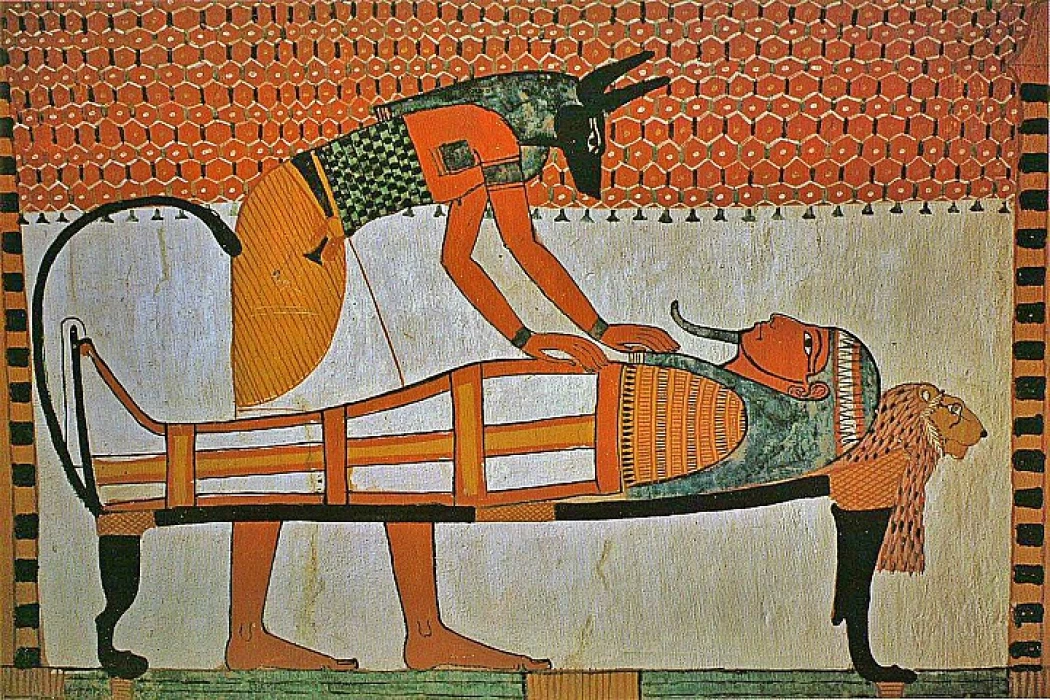
As soon as the body underwent the process of cleansing, the embalmers would cut an incision on the left side of the body at the abdomen level and remove the internal organs. The process of extraction of the liver, lungs, stomach, and intestines was very meticulous since these organ systems decomposed very fast. Then the organs were all treated and mummified before placing them in canopic jars. These jars were protected by the four sons of Horus, each one responsible for a specific organ.
Imsety, the one with a human head, was the protector of the liver.
Hapy was the cuckoo who was tasked with the protection of the life-supporting lungs.
With the face of a jackal, Duamutef was in charge of the tissues of the evaporating stomach.
Lastly, Qebehsenuef, a deity depicted as having the head of a Zank, was responsible for safeguarding the intestines.
Broken but not lost This covers the topic of canopic jars, which is of course recognizing the heart. The Egyptians, however, did not remove the heart, as it was an essential organ of thought and emotions that they thought would help in judging one’s soul in the afterlife.
3. Desiccation with Natron
To eliminate the possibility of decomposition, meticulous drying of the corpse was necessary. This was achieved by the use of natron, an evaporite salt mineral that consists of sodium carbonate and sodium bicarbonate. The corpse was covered in natron powder, both from the outside and the inside, and was subsequently left to dry for close to forty days. Besides absorbing water, Natron also had a strong antiseptic effect, which aided in the preservation of the corpse.
4. Filling and Stuffing the Body
After the process of embalming had been finalized, the embalmers defrosted the body from the nanotron and performed a secondary wash of the corpse. Rags, wood shavings, and even dried plants and animals, among other things, were put to use to stuff the body cavities to retain the shape of the bones and to improve the overall look of the corpse. This stage ensured that the corpse was lifelike, which was very important due to the requirement for postmortem supervision of the holy corpse.
5. The Wrapping of the Body
Once the physical body had been established and completed, the final and most familiar aspect of the mummification of a body took place, which is known as the wrapping of the body. The embalmers used long strips of linen to layer wrappings around the dead body in various folds. During this process, amulets and charms were also added into the folds of the linen to ensure they would help in guarding the dead on his way. Djed pillar, which represented stability, and ankh, which represented eternal life, are some of the amulets.
Pieces of rotten cotton remained to stain the wrapping of the corpse. During this time prayers and rituals were chanted and carried out in order to keep the corpse and the ritualist as clean as possible spiritually. Introduced in the text is the Book of the Dead, which is a collection of rituals and incantations meant to assist the deceased in navigating the realm beyond. Such writings were normally found within the wrappings or placed in the burial chamber.
6. The Final Touches
The last action performed during mummification was covering the face of the dead with a functional mask. For kings and other significant personalities, these masks were created out of gold, like the famous mask of King Tut. In the case of others, they were made of painted cartonnage (linen or papyrus mixed with plaster).
The mask was not solely an artistic representation of the deceased but also served as a medium through which the ka and ba would identify the corpse. Following the placement of the mask, the embalmed corpse was positioned inside a series of coffins, each progressively ornamented. These coffins, which were quite often inserted into a sarcophagus, were positioned in a vault and encased with objects that the dead person might require in the other world—namely foods, beverages, utensils, and clothes.
Mummification as a Spiritual and Social Practice
Mummification, however, was not practiced only on the pharaohs and the rich. The most complex mummification procedures, however, were costly and often confined to royalty, nobility, and wealthy people. In contrast, less sophisticated methods of mummification were within the reach of those in lower strata of society. The primary aim, which was the preservation of the body for the journey into the afterlife, was common to all social classes and thus indicates the religious nature of the practice of mummification in ancient Egypt.
Furthermore, animals were also mummified, particularly those attached to certain deities, like cats (connected to the goddess Bastet) and bulls (associated with Apis). These animal mummies were often used in worship and given to the gods as offerings.
The Judgment of the Dead: The Weighing of the Heart
Once the mummification process was complete, the dead had to undergo a ritual in which they were judged by Osiris, king of the dead. It is known as the Weighing of the Heart. The heart, which was not removed from the body, was placed on a scale and weighed together with the feather of Maat, who the Egyptians believed was the goddess of truth and justice. If the heart was determined to be lighter than the feather, he was considered to be a person who was pure and was therefore allowed to inhabit the Field of Reeds for eternity. On the contrary, if the heart was found to be heavy, it was feasted upon by the terrifying goddess Ammit, who was part lion, part crocodile, and part hippo, and the soul was thus lost forever.
Conclusion
The mummification techniques of ancient Egypt should not be thought of only as a means to preserve the dead bodies of rulers; rather, they can be appreciated as an elaborate and complex ritual, wherein lies the hope of resurrection. No part of the process, from cleaning the corpse to the last rights, was without deep significance; every detail of the process was intended so that the dead live forever in the next world. The highly developed methods of preserving the bodies of the dead, as well as the strong commitment to the mummification process, constituted one of the greatest accomplishments of ancient Egyptian civilization and built a legacy that has not ceased to intrigue people around the world even today.
The art of mummification, because it is inspired by a lot about the afterlife, is one of the more dominant and fascinating practices that ancient Egyptian culture exhibited. For the ancient Egyptians, death was not an end but a transition into another state of being. The physical form was perceived as an important instrument to be used by the spirit; therefore, its maintenance was imperative for every traveler of the afterlife. This notion led to the complex procedure of mummification, which is an art and skill that has been cultivated over generations. Mummification in ancient Egypt was not just about treating a corpse; it was also about relieving a spirit; hence, it was performed alongside prayers and other rituals showing the deep honor the people had for their dead.
According to ancient Egyptian traditions, the conception of the soul is multi-layered and includes components such as the ka, ba, and akh. The ka refers to the life associated with a person, while ba stands for the person's character, and each is the form of existence that a person possessed in the afterworld. For these aspects to come together and coexist in the other world, due to the limitations of space and time, the physical form of the body had to be preserved. This is where mummification became the most important aspect.
The Egyptians felt that if the body were not mummified, the soul or spirits could not take the shape of the mummified body. And the ka would go hungry. This explains why one shouldn’t view the act of mummification purely as a decorative task of body preservation. It was a process that was important in assuring that one was buried in the afterlife.
The Evolution of Mummification
Mummification as a practice runs deep in the history of Egypt, as it can be argued that even in his prehistoric age, the Egyptians encouraged the preservation of bodies by conducting shallow burials in the desert. The natural hot and dry sand of the desert further dried the bodies, thus preserving them almost intact. However, with the evolution of Egyptian society and as the tombs became elaborate, natural preservation could not be achieved anymore. This stimulated the quest for artificial methods of preservation of dead bodies.
During the Old Kingdom (c. 2700–2200 BCE), the Old Kingdom (c. 2575–2150 BCE) commenced with the reign of Djoser, in whose time, though the process of mummification had been improved, it was still in its early alpha stages. The exquisite Egyptian practice of mummification or full body preservation, as it is infamously known, reached its peak during the New Kingdom's reign (c. 1550-1070 B.C.). By that time, the embalmers had beautified the process to a complete ceremonial performance, which took about 70 days.
The Ancient Egyptian Mummification Process: Step by Step
Mummification was a sophisticated process that entailed the preservation of the corpse and the execution of sacred rites. The whole operation was carried out in specially designated embalming parlors, which were often found near a cemetery or a holy place.
1. The Washing of the Body
The initial phase would be the cleaning of the body, which was done for two main reasons. The body was taken to the ‘Place of Purification,’ Shebu. Palm wine, which is a type of liquor, was then used to bathe the body afterward water from the Nile would be poured over them. This bath was not only functional; it also served a deeper meaning of how the dead body was being prepared for the afterlife's voyage.
2. Removal of Internal Organs
As soon as the body underwent the process of cleansing, the embalmers would cut an incision on the left side of the body at the abdomen level and remove the internal organs. The process of extraction of the liver, lungs, stomach, and intestines was very meticulous since these organ systems decomposed very fast. Then the organs were all treated and mummified before placing them in canopic jars. These jars were protected by the four sons of Horus, each one responsible for a specific organ.
Imsety, the one with a human head, was the protector of the liver.
Hapy was the cuckoo who was tasked with the protection of the life-supporting lungs.
With the face of a jackal, Duamutef was in charge of the tissues of the evaporating stomach.
Lastly, Qebehsenuef, a deity depicted as having the head of a Zank, was responsible for safeguarding the intestines.
Broken but not lost This covers the topic of canopic jars, which is of course recognizing the heart. The Egyptians, however, did not remove the heart, as it was an essential organ of thought and emotions that they thought would help in judging one’s soul in the afterlife.
3. Desiccation with Natron
To eliminate the possibility of decomposition, meticulous drying of the corpse was necessary. This was achieved by the use of natron, an evaporite salt mineral that consists of sodium carbonate and sodium bicarbonate. The corpse was covered in natron powder, both from the outside and the inside, and was subsequently left to dry for close to forty days. Besides absorbing water, Natron also had a strong antiseptic effect, which aided in the preservation of the corpse.
4. Filling and Stuffing the Body
After the process of embalming had been finalized, the embalmers defrosted the body from the nanotron and performed a secondary wash of the corpse. Rags, wood shavings, and even dried plants and animals, among other things, were put to use to stuff the body cavities to retain the shape of the bones and to improve the overall look of the corpse. This stage ensured that the corpse was lifelike, which was very important due to the requirement for postmortem supervision of the holy corpse.
5. The Wrapping of the Body
Once the physical body had been established and completed, the final and most familiar aspect of the mummification of a body took place, which is known as the wrapping of the body. The embalmers used long strips of linen to layer wrappings around the dead body in various folds. During this process, amulets and charms were also added into the folds of the linen to ensure they would help in guarding the dead on his way. Djed pillar, which represented stability, and ankh, which represented eternal life, are some of the amulets.
Pieces of rotten cotton remained to stain the wrapping of the corpse. During this time prayers and rituals were chanted and carried out in order to keep the corpse and the ritualist as clean as possible spiritually. Introduced in the text is the Book of the Dead, which is a collection of rituals and incantations meant to assist the deceased in navigating the realm beyond. Such writings were normally found within the wrappings or placed in the burial chamber.
6. The Final Touches
The last action performed during mummification was covering the face of the dead with a functional mask. For kings and other significant personalities, these masks were created out of gold, like the famous mask of King Tut. In the case of others, they were made of painted cartonnage (linen or papyrus mixed with plaster).
The mask was not solely an artistic representation of the deceased but also served as a medium through which the ka and ba would identify the corpse. Following the placement of the mask, the embalmed corpse was positioned inside a series of coffins, each progressively ornamented. These coffins, which were quite often inserted into a sarcophagus, were positioned in a vault and encased with objects that the dead person might require in the other world—namely foods, beverages, utensils, and clothes.